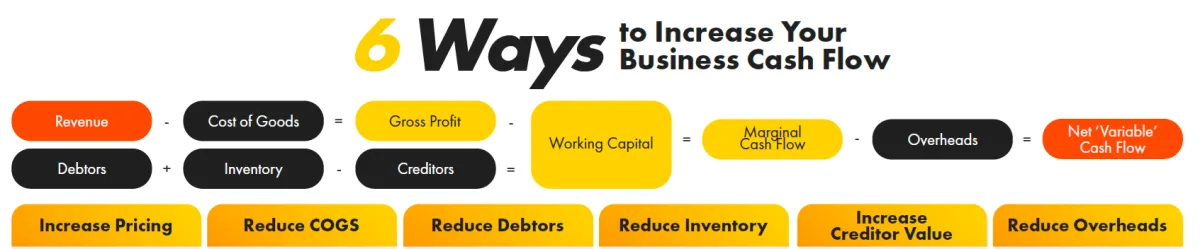
What Your P&L Doesn't Tell You
In business, "Profit" is often a matter of opinion, but "Cash" is a matter of fact.
To excel as a business owner, you must understand the distinct roles of your financial statements. A Profit & Loss (P&L) statement tells you about your operational efficiency over a specific period. The basic formula is:
Profit = Revenue - (Variable Costs + Fixed Costs + Salaries)
While this tells you if your business is "profitable," it doesn't tell you if you are "liquid."
The Cash Flow Reality
Cash flow tracks the actual movement of dollars. A business can be profitable on a P&L but still run out of money because of:
Debt Service: Principal payments on loans don't show up on a P&L, but they definitely leave the bank account.
Timing: If you pay your vendors in 15 days but your customers pay you in 45, you have a 30-day "cash gap" that profit won't fix.
Making Better Decisions
When you review and manage with both the P&L and Cashflow Statement your decision-making shifts. You stop just looking for "more sales" and start looking for better timing. You begin to:
Optimize Revenue: Focus on high-margin work with faster payment terms.
Reduce Costs: Negotiate better terms with vendors to keep cash in your account longer.
Strategic Timing: Align your outflows with your inflows to maximize liquidity.
You can accelerate this with good incentives, for example instead of paying yourself based on profit, pay yourself based on cash gains over time. This will impact your financial decisions at work, and as a bonus, at home too.
By the way ActionBOARD was a big hit last month so I'm adding a special date on Friday May 1st. Check out the image below with the link to sign up.
Ready to get back on pace?
Take the 3-minute Business Check to see which goals need your attention most: Get Your Score Here
